
My Hosting Philosophy
If the energy isn't there, no amount of beautiful food will save you

If the energy isn’t there, no amount of beautiful food will save you. I think about this a lot when I think about hosting. About what actually makes a party work. About why some nights linger and others quietly fizzle, even when everything looks right on paper.
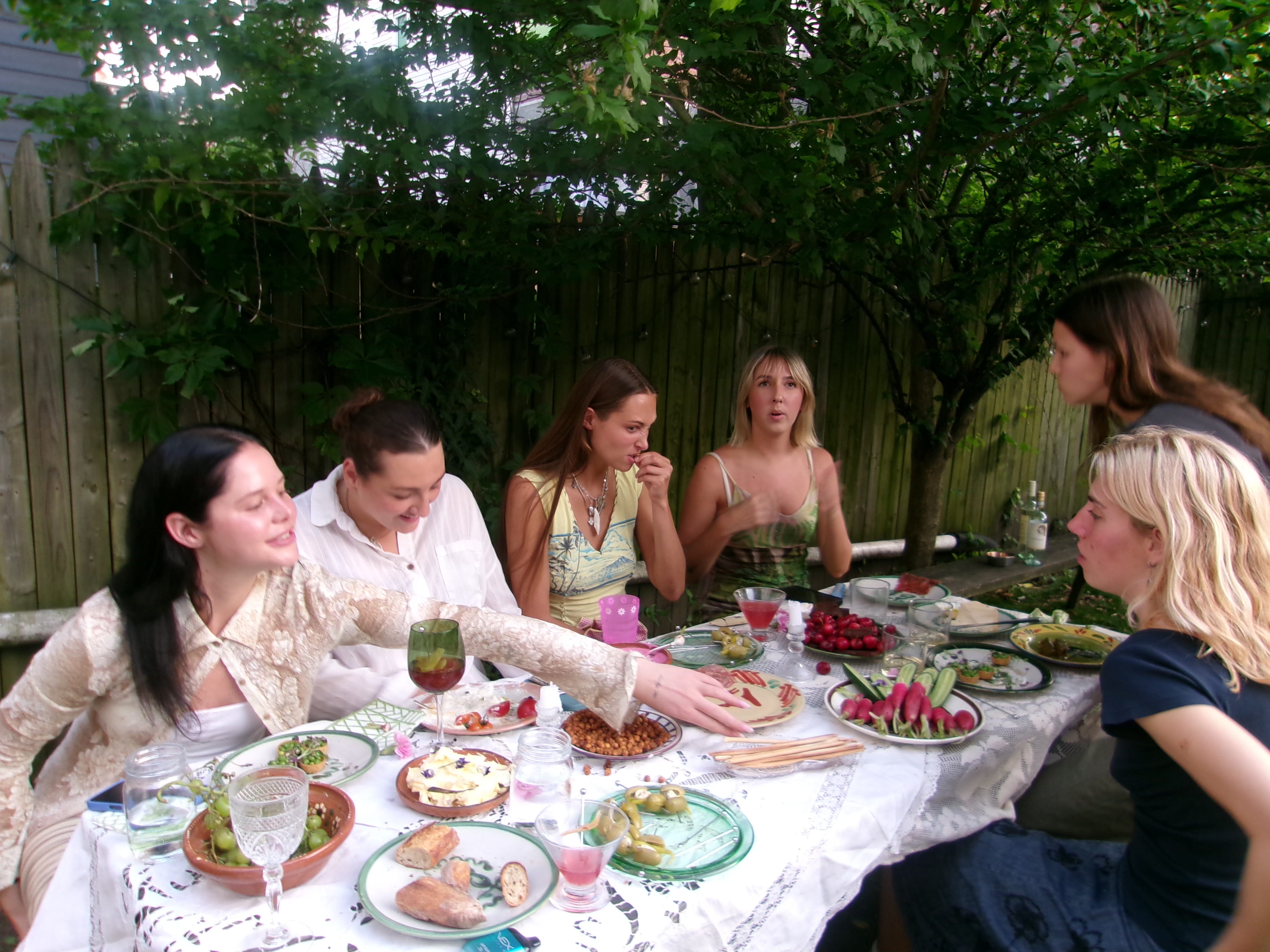
The promise of good, beautiful food is the hook. It gets people in the door. A beautiful table, good lighting, the sense that something thoughtful is about to happen. That part matters. I care about it deeply. But it’s not why people stay.
People don’t linger because the olives were perfectly marinated or the candles were expensive. They stay because the room softened. Because they forgot to check the time. Because the night felt generous instead of staged.
A party can look perfect and still fail. If guests are hovering near the door, checking their phones, or leaving early with polite excuses, something went wrong. And it usually has very little to do with how good the food was.
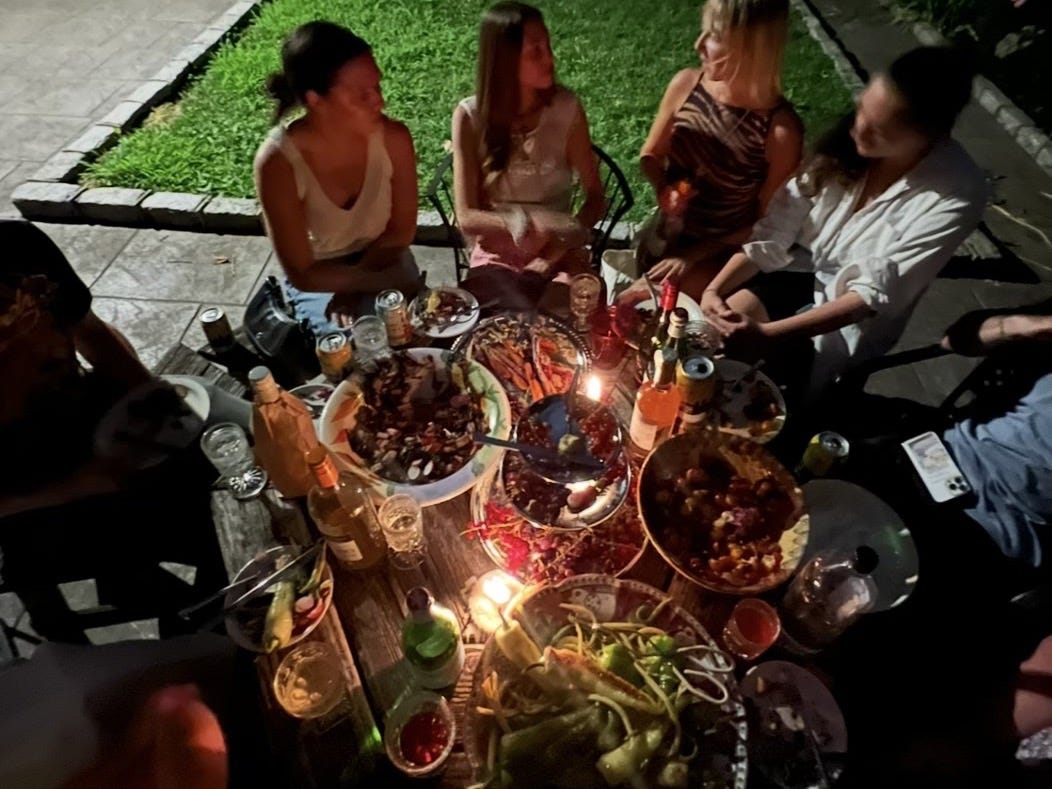
Hosting is not just cooking or styling or setting a scene. It’s managing energy. It’s paying attention. It’s knowing when to intervene and when to let things unfold. Hosting is a balance. You want the room to feel intentional and impressive, but never at the expense of your guests’ experience.
I’ve been thinking about this a lot lately as I consider what it might look like to bring Third Thursdays back in one form or another. When I look back at those dinners now, what stands out isn’t the menus or the photos or even the scale. It’s the nights where I barely left the kitchen. Where I was so focused on getting plates out and keeping things moving that I wasn’t really present in the room.
Part of that was structural. We were keeping prices low, which meant running on very little manpower. Everyone involved, myself included, was essentially working for free. We didn’t have the luxury of a real front of house team, so hosting and cooking collapsed into the same role. There were nights where only one person was actually able to pay attention to the guests at any given moment, and that person often wasn’t me.
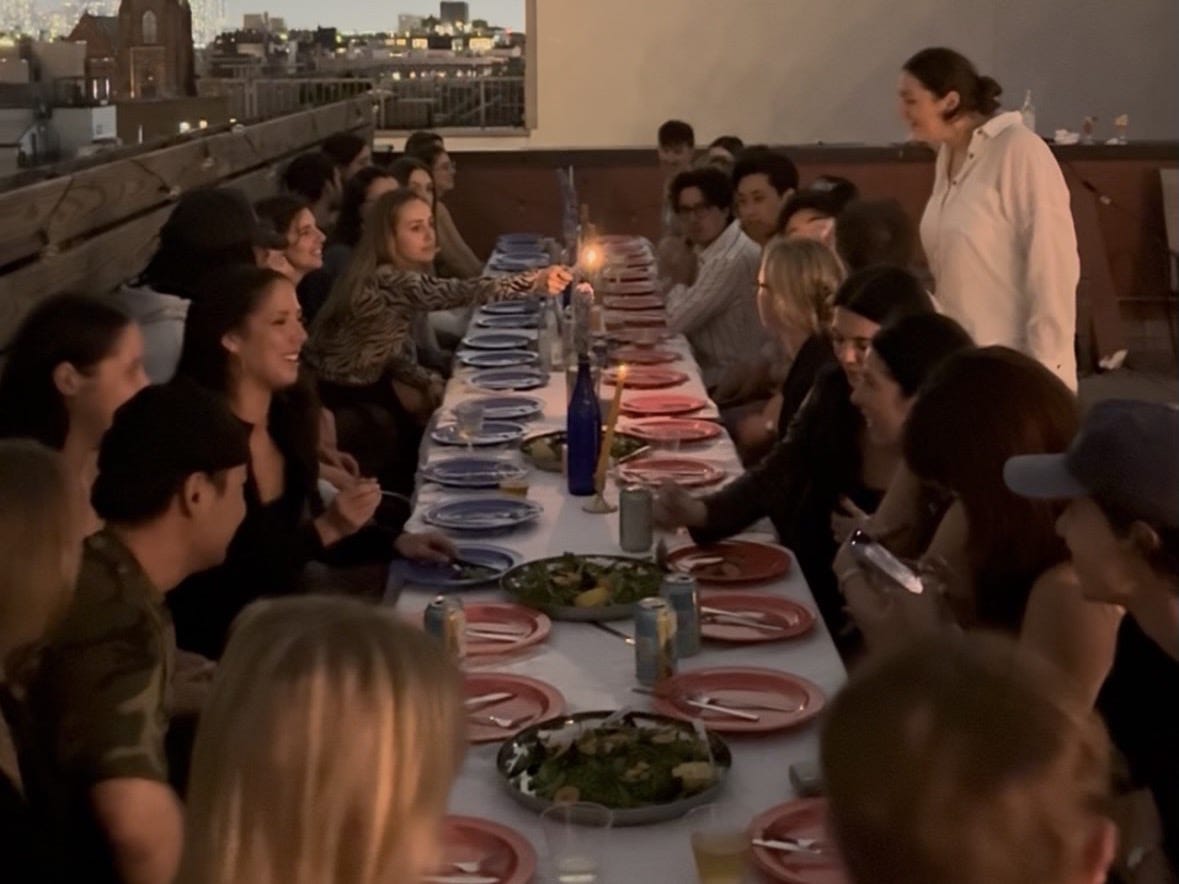
At a certain scale, that tradeoff starts to matter. You can feel it in the room. The food might be good. The setup might be beautiful. But if no one is holding the energy, if no one is making people feel taken care of, the experience flattens.
That’s part of why I’m not interested in 100 person dinner parties anymore. For me, forty people is the upper limit of what still feels intentional. In my own home, eight to ten people feels perfect. Anything beyond that requires a level of support and care that you can’t fake. You can scale a party, but you can’t scale attention without paying for it in some way. If quality is what gets sacrificed as you grow, then there’s no point.
These are my rules for dinner parties. They’re not about perfection. They’re about connection.
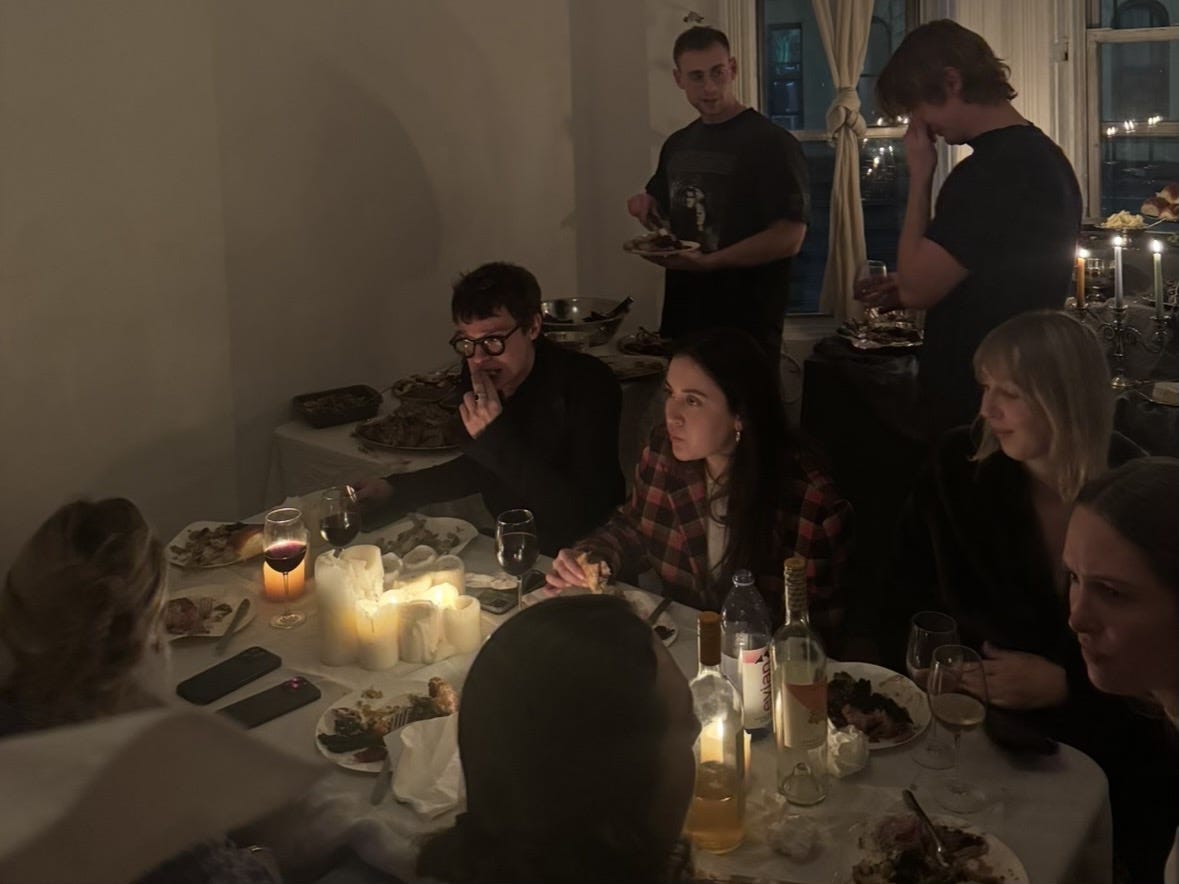
1. Don’t make people sit down right away.
Standing time matters. It gives people a chance to arrive, take stock of the room, and decide where they actually want to land. It helps guests feel more comfortable in a new environment and gives them an easy way out of a bad conversation. The exception is if you’re a truly great host who knows your guests well enough to have already figured out the ideal table setup and laid out place cards. That can be wonderful. Otherwise, let people move first. If you don’t have room for standing and for a table, ditch the traditional setup. People can stand in your living room and eventually eat around the coffee table.
2. Give people a drink or something to do immediately.
People want something to do with their hands the second they walk in. A drink gives them that, and it instantly lowers the temperature of the room. Wine, a batched cocktail, something non alcoholic that doesn’t feel like an afterthought. It doesn’t need to be complicated. Similarly, I love that my friends at Heirloom Supper Club put out name tags at larger dinners. If you’re hosting a group of strangers, it’s a super effective way to get the ball rolling right out of the gate and take pressure off the first interaction.
3. Make the food experiential.
This is where a grazing table really earns its keep. Not as Instagram bait, but as a social tool. Food people can reach for, assemble, or talk about gives them something to do and something to say. Large format dishes work beautifully here too. A seafood boil, a big roast carved at the table, a pavlova or a sheet cake that takes up real space. These moments create shared focus and make the experience feel interactive. A grazing table is just one of the easiest ways to engage guests from the start and give them something to do before sitting down.
4. You are not allowed to hide in the kitchen.
This is why prep matters so much. Only serve things you know you can pull off without disappearing all night. Or throw it potluck style. Guests usually don’t want to come empty handed anyway. Once people arrive, your job is to take care of them. That means starting conversations, introducing people, telling stories, and paying attention to the room. It means adjusting the playlist when the energy shifts. The food will survive without you hovering over it.
5. Control the ending.
Once the first person leaves, everyone else becomes a little more alert. They start wondering when they should make their exit too. It’s not good energy for the room. Keep people happy, full, and engaged until you’re actually ready for the night to be over. A dessert or a digestif helps. Music with a little more energy helps. Keep the wine bottles on the table. Signal that the night is still alive.'
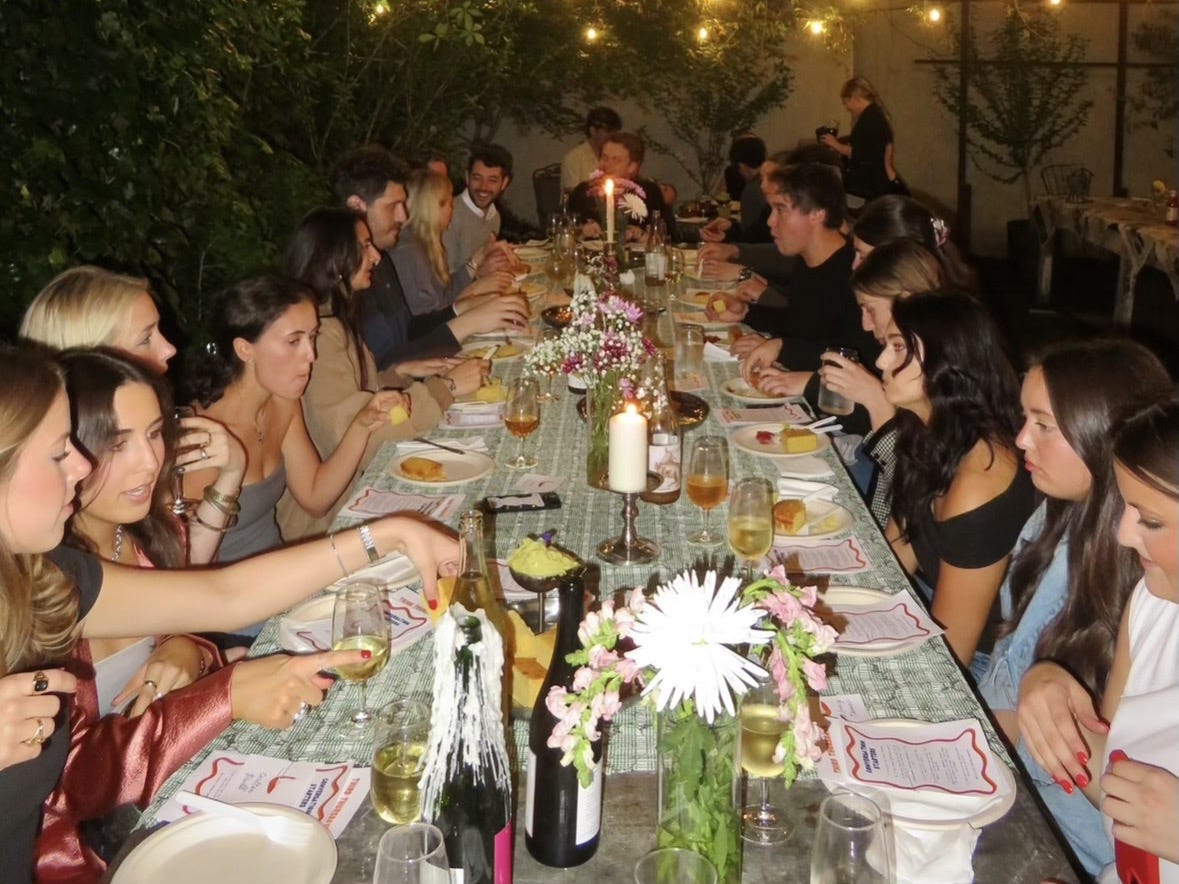
The promise of good food gets people in the door. Good hosting is what makes them stay.
There’s also a lot to be said about how to be a good guest, but that’s another post…
xx,
Amy
Exceptional insight on managing energy rather than aesthetics. That framing about hosting as attention management, not just event styling, changes the whole calculus of what makes agathering work. I've been to plenty of polished dinners that felt flat becuse no one was actually present in the room. The 40-person limit makes total sense when attention cant scale without infrastructure.
So good